
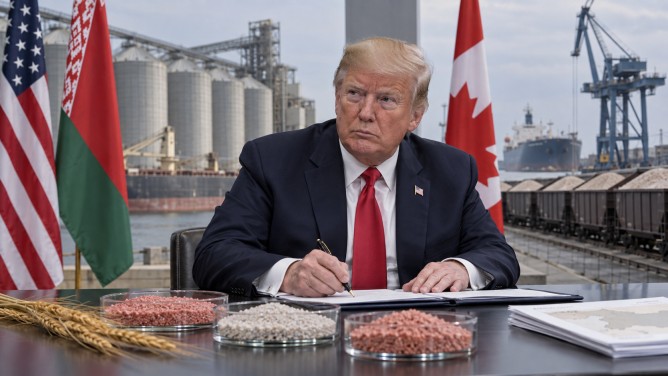
A potential deal between the United States and Belarus could lead to cheaper potash fertiliser, providing economic relief to American farmers and ranchers amid rising trade tensions with Canada. US President Donald Trump announced that the proposed agreement with Belarus might offer potash at a lower cost than current imports from Canada, which has traditionally been the largest supplier of this key agricultural input to the US.
The United States heavily relies on imported potash for fertiliser production, with Canada being the primary source. However, the ongoing trade dispute between Washington and Ottawa has prompted the US government to explore alternative suppliers. This development could significantly impact the agricultural industry’s cost structure by reducing dependency on Canadian potash.
In the backdrop of these negotiations is a broader geopolitical context. The Trump administration’s move to engage with Belarus comes after easing some sanctions on the country, following its release of political prisoners. These steps indicate a shift in US-Belarus relations, even as Belarus, led by President Alexander Lukashenko, faces criticism for its domestic policies and international stance, particularly its support for Russia in the Ukraine conflict.
The implications of a US-Belarus potash deal extend beyond economic considerations, potentially affecting diplomatic dynamics. While the agreement could benefit US agriculture, it also involves navigating Belarus’s complex political landscape and its ties with Russia. Thus, the deal’s success could hinge not only on economic factors but also on the broader geopolitical environment.
As negotiations progress, the focus remains on how this potential shift in potash sourcing might alter agricultural economics in the US and the nature of international relations with Belarus in the current global context.