
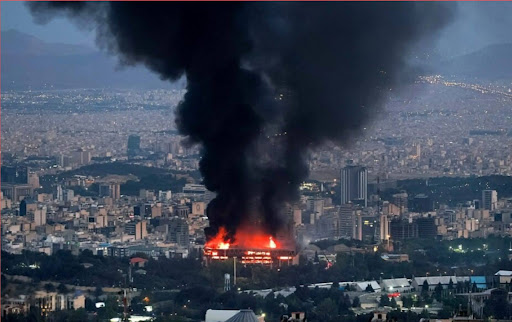
A leading energy analyst at the Chatham House thinktank delivered a stark warning on Saturday that oil prices could surge from their current level of around $120 per barrel to $150 if US strikes on Kharg Island continued to damage the facility’s export capacity. Neil Quilliam of Chatham House described Kharg as “too vital for global energy markets” for its destruction not to have profound economic consequences. His comments came as US warplanes struck the island for the second consecutive day, following a massive assault on Friday that President Trump said in public remarks had effectively demolished most of the facility.
The warning underscored the enormous economic stakes of a conflict that had already disrupted global energy markets significantly. Kharg Island handles the vast majority of Iran’s crude oil exports and sits just 15 miles off the Iranian coast. Its sustained destruction, combined with Iran’s ongoing closure of the Strait of Hormuz since February 28, threatened to remove a significant portion of global oil supply from the market. At $150 per barrel, the economic consequences would be severe, potentially triggering inflation spirals and recessions in the most vulnerable oil-importing nations.
Trump simultaneously called on allied nations to send warships to the Strait of Hormuz, naming China, France, Japan, South Korea, and the UK. His appeal was the first public acknowledgment that reopening the waterway might require international support rather than unilateral US action. Iran was not moderating its position, launching ballistic missiles at Fujairah in the UAE and threatening any Gulf energy facility with American ties. The foreign minister called on Arab states to expel US forces. Iran continued firing rockets at Israel simultaneously.
Israel conducted dozens of raids inside Iran, killing at least 15 people in Isfahan. US Defence Secretary Pete Hegseth claimed Iran’s leadership was “desperate and hiding” and wounded. Iranian officials confirmed the injury but dismissed its severity. The International Crisis Group assessed the regime as intact and pursuing a deliberate long-term strategy. The USS Tripoli and 2,500 additional marines were heading to the region, adding military muscle to US options.
The human and economic costs of the conflict were mounting rapidly. More than 1,400 Iranians had been killed in sustained bombing. Thirteen Israelis and roughly 20 Gulf residents had died. Lebanon’s crisis continued, with 800 killed and 850,000 displaced from Israeli strikes on Hezbollah. Six US troops died in an aircraft crash in Iraq. The US embassy in Baghdad was struck, and Americans in Iraq were ordered to leave. Quilliam’s $150 warning was not a theoretical scenario — it was a real possibility that every government with energy import dependencies was taking seriously.