
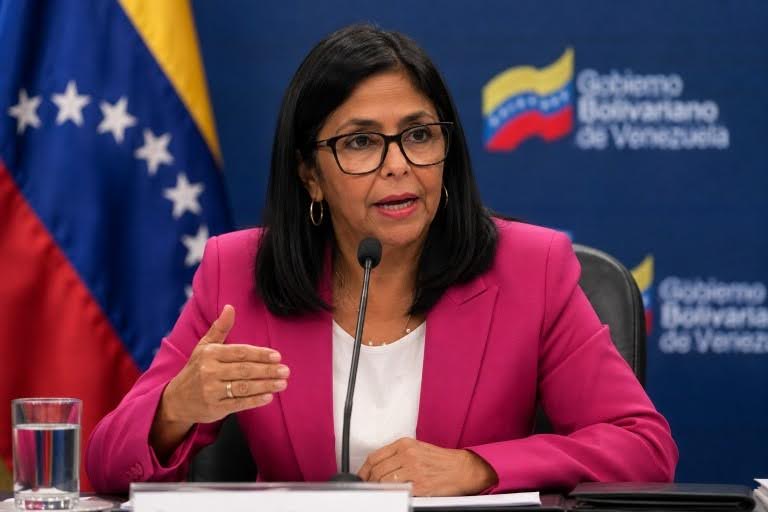
Venezuela’s interim leader, Delcy Rodríguez, has stood firm in defending a contentious energy pact with the United States, asserting that the nation will maintain control and sovereignty over its oil resources in spite of strong domestic opposition. Rodríguez, who assumed leadership earlier this year following Nicolás Maduro’s removal through a U.S.-led operation, addressed the Venezuelan populace to dispel accusations of yielding national assets to Washington. She emphasized that the agreement could potentially bring in more than $209 billion in revenue, positioning Venezuela as a significant player in the global energy sector. According to Rodríguez, without necessary investment, technology, and infrastructure, the country’s vast oil reserves would remain untapped and economically unproductive.
The deal, reportedly finalized in secret over several months, would grant the United States substantial control over Venezuela’s extensive crude oil reserves, which are the largest confirmed reserves globally, surpassing those of major oil producers like Saudi Arabia and Iran. Rodríguez outlined that the agreement encompasses 17 key oilfields with a goal of producing over 1.5 million barrels of oil daily. However, the announcement has sparked considerable criticism from both political adversaries and members within Rodríguez’s own political sphere. Detractors have labeled the deal as a significant forfeiture of national resources, with a former senior executive from the state oil company condemning it as an unprecedented breach of the country’s sovereignty.
Public discontent has manifested in protests on the streets of Caracas, where demonstrators have voiced their concerns over perceived foreign interference. Meanwhile, social media platforms have seen a wave of users mocking the deal, even suggesting a rebranding of the national oil company. This agreement signifies a dramatic policy shift for Rodríguez and her political allies, who have historically positioned themselves against the foreign domination of Venezuela’s natural resources. Rodríguez herself has previously issued warnings against similar arrangements in her past public statements.
Moreover, opposition leaders have raised alarms that the deal might jeopardize ongoing efforts to reinstate democratic processes in Venezuela. They emphasize that enduring economic prosperity hinges on transparent governance and free elections, arguing that the absence of these elements could render the agreement’s foundation unstable. As questions persist about the timeline for future elections, critics maintain that the path to economic revitalization is inseparable from political reform and accountability.