
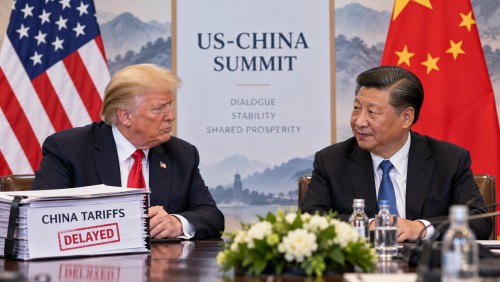
The anticipated delay in the implementation of new U.S. tariffs on Chinese goods provides a strategic opportunity for the United States to leverage negotiations with China. This pause aims to facilitate dialogue between U.S. President Donald Trump and Chinese President Xi Jinping, as both nations prepare for a high-stakes meeting.
The U.S. was poised to announce a 7.5% tariff on Chinese imports, potentially increasing the overall tariff rate to approximately 20%. The decision to defer this announcement may offer President Trump a bargaining chip as trade discussions progress. These tariffs were part of a broader investigation initiated under Section 301 of the Trade Act of 1974, addressing concerns over China’s excess industrial capacity.
China, on its part, has cautioned that any increase in tariffs beyond current levels could provoke a response, emphasizing that protectionist measures should not be justified by concerns over excess capacity. The Chinese government maintains that such issues should not serve as grounds for escalating trade tensions.
In the lead-up to the Trump-Xi summit, both countries aim to solidify trade commitments, with tariffs remaining a significant point of contention. Discussions between U.S. and Chinese negotiators are expected to occur prior to the leaders’ meeting, which marks Xi’s first visit to the U.S. since 2023.
The outcome of these negotiations could significantly impact U.S.-China economic relations, as both sides seek to navigate the complexities of international trade and maintain a stable relationship amidst ongoing tensions.