
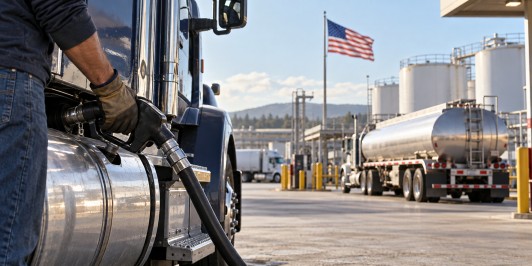
As diesel prices in the United States reach record highs, the Trump administration is contemplating a temporary 90-day export ban in an effort to boost domestic fuel supplies and alleviate price pressures. The proposal aims to keep more diesel within the country, but experts warn that its impact may be limited and could pose challenges to the US fuel industry.
The primary concern is the uneven distribution of diesel supplies across the nation. With much of the refining capacity concentrated along the Gulf Coast, shortages are emerging in regions such as the Northeast and West Coast. Existing pipelines are nearly at capacity, complicating the transportation of additional fuel to areas in need. Although transporting diesel by water presents an alternative, it is a slower and costlier option, potentially diminishing the intended effect of lowering prices in shortage-stricken regions.
Global market conditions further complicate the situation. US diesel prices are influenced by international fuel prices, and domestic refiners are often incentivized to export fuel when overseas prices are higher. Recent disruptions in global energy supplies, including those linked to the Iran war and attacks affecting Russian refining capacity, have tightened global supplies, exerting additional pressure on prices.
Historically, the United States has imposed energy export restrictions during periods of market stress, such as the measures introduced during the 1973-74 Arab oil embargo. However, those restrictions were eased and eventually repealed in 2015 as domestic oil production increased.
While a temporary diesel export ban could theoretically increase domestic availability, its overall effectiveness would depend on several factors, including refinery production levels, transportation capacity, regional demand, and global fuel prices. If refiners cut production due to reduced export profitability, the anticipated increase in domestic supply might not materialize as expected.
In conclusion, while the proposed export ban might provide some relief to the US diesel market, it is unlikely to fully resolve the broader supply and pricing challenges currently facing the industry.